#Welcome To
Kamlang Tiger Reserve & Wildlife Sanctuary
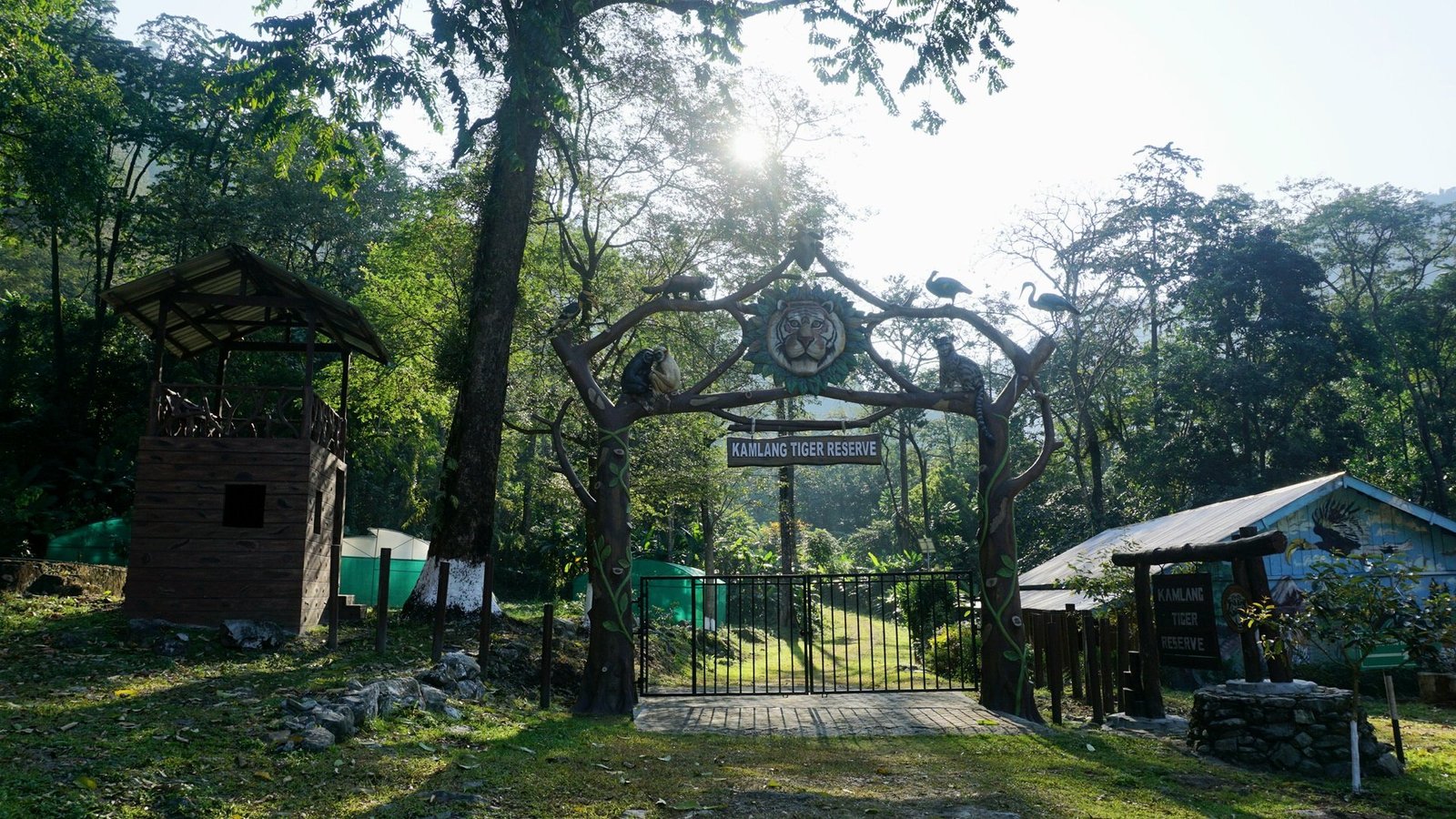
Kamlang Tiger Reserve & Wildlife sanctuary situated in South-eastern part of Lohit District and spread over a part of Anjaw district in Arunachal Pradesh was declared as a tiger reserve in 2017. The total area of KTR is 783 sq km, which includes a core area of 696 sq km and a buffer area of 87 sq km. Perennial rivers like Lang, Lathi, Kamlang, Sinabarai, Tawa, and Lai flow from the reserve. Glaw Lake which is one of the perennial and among the most picturesque lakes which can be trekked down to reach in 7 – 8 hrs, is situated at an altitude of 1,168 m. The major indigenous communities inhabiting this region are the Kaman - Mishmi and Taraon - Mishmi. Kamlang tiger reserve represents one of the biodiversity hotspots of India, Himalaya, which supports many elusive and rarely sighted mammals, birds, and other taxa.
Geographic Features
The reserve has rugged terrain with an altitudinal gradient of 500 m to 4500 m from msl. Kaul and Haridasan 1987 have classified forests of Arunachal Pradesh into six categories viz; tropical, subtropical, temperate, alpine, subalpine and secondary forest out of which KTR contain Tropical wet evergreen forests, Tropical semi-evergreen forests, Sub Tropical semi evergreen forests, Moist Bamboo forests, Himalayan Moist Temperate forests, Moist Alpine Scrub forest.
The vegetation type varies from tropical wet evergreen forests to Alpine forests in the upper regions of DaphaBum Peak which borders Namdapha Tiger Reserve. The reserve majorly falls within the sub-tropical zone and enjoys a sub-tropical climate. There are about 150 tree species common in this area. Such floral diversity in this Tiger reserve gives a large variety of faunal species. Dhuna (Canarium resiniferum), Hilika (Terminalia chebula), Amari (Amoora wallichii) etc. Bamboo, Grasses, and shrubs are good fodder for wild animals.
The area has mostly steep mountainous terrain, with few gentle slopes crisscrossed by numerous rivers (Lai, Lati, Lang and Kamlang), rivulets and perennial streams. Kamlang Tiger Reserve lacks systematic scientific surveys mainly due to extremely complex terrain and hence is very less known for its biodiversity.It is surrounded by the Kamlang Reserve Forest to the west and north, un-classed state forest (USF) to the east and Namdapha Tiger Reserve to the south. It is one of the twelve protected areas in the state of Arunachal Pradesh.